Soccer Ball Sizing: Getting It Right for Toddlers and Kids
One of the most frequent mistakes rookie soccer families make is handing a standard full-size soccer ball to a toddler or young child. A regulation Size 5 ball weighs approximately 410–450 grams and has a circumference of 27–28 inches. For young legs, kicking an oversized ball can cause strain on hip flexors and ankle tendons.
Standard youth sports federations adhere to clear age-graduated ball sizing rules:
- Size 3 Ball: Designated for ages 8 and under (U4 to U8, including toddlers). Circumference is 23–24 inches; weight is 300–320 grams. Perfect for small feet and developing foot strikes.
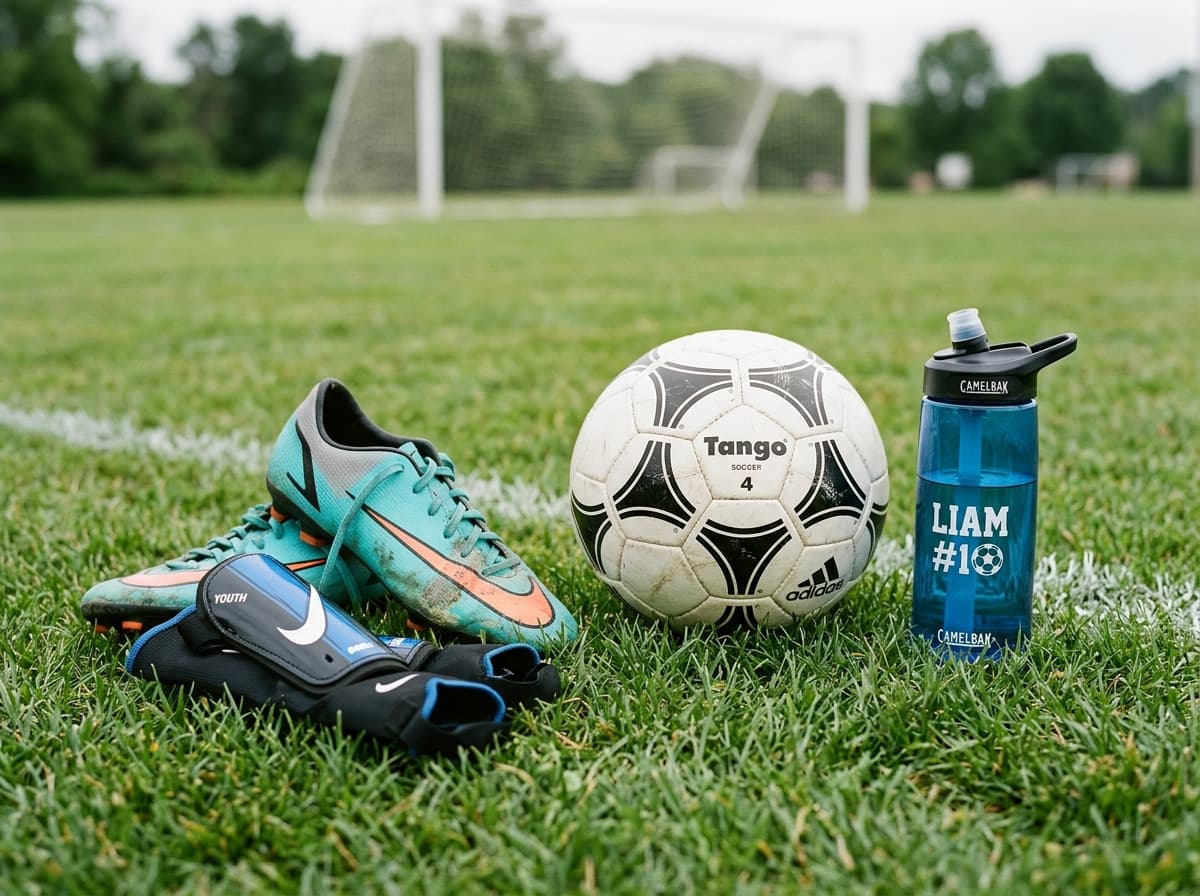
- Size 4 Ball: Designated for ages 8 to 12 (U9 to U12). Circumference is 25–26 inches; weight is 350–390 grams. Standard transitional ball before full regulation play.
- Size 5 Ball: Designated for ages 13 and older (U13+). Standard official match ball used in high school, collegiate, and professional leagues.
Cleats vs. Turf Shoes: Footwear That Protects
Children’s feet grow rapidly, tempting parents to purchase cleats one size too large. However, loose footwear allows the foot to slide inside the boot, creating painful blisters and increasing the likelihood of ankle rolls on uneven natural grass.
For younger ages (U4–U8), rubber multi-ground (MG) molded studs or artificial grass (AG) turf shoes with dozens of miniature rubber nubs are frequently preferable to stiff plastic blades. Turf shoes distribute pressure evenly across the sole, reducing occurrences of Sever’s disease (calcaneal apophysitis / growing heel pain).
Shin Guards: Ankle Sleeves vs. Slip-Ins
Shin guards are non-negotiable for all organized practices and matches. There are two primary varieties available:
1. Stirrup / Ankle-Wrap Guards: Best for ages 3 to 8. These feature padded fabric that loops under the foot and protects the vulnerable ankle malleolus bones from stray kicks.
2. Slip-In Guards: Preferred by older kids (ages 9+). These are lightweight composite shells that slide inside compression sleeves or high socks, offering greater mobility.